Learning
Earth Day at Tiny Tots
For Earth Day every child potted a plant of their own. The harder part was the fortnight afterwards.
Earth Day falls on 22 April, and it is very easy to mark badly. A poster, a slogan the
children cannot read, a photograph, done. We try to do the one version of it that a
four-year-old can actually hold on to: give them a living thing and make them responsible
for it.
One pot each
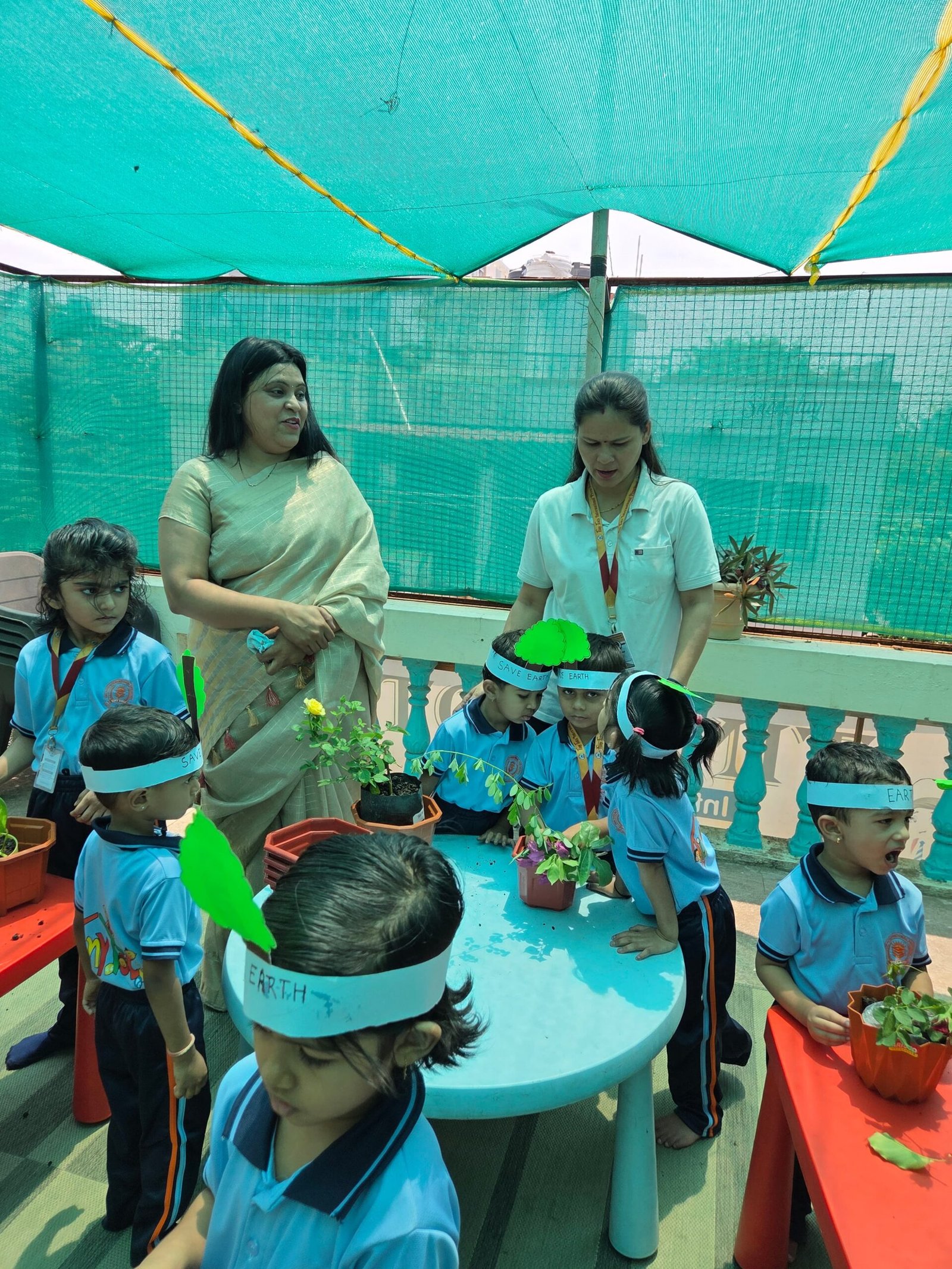
Every child wears a paper “Save Earth” headband they made in class, fills their own
pot with soil, settles a young plant into it, presses the soil down and waters it. The pots
stay at school, lined up where they can be seen.
Then comes the part that does the teaching. There is a watering rota. Children forget. A pot
dries out and somebody notices and is upset about it. That is not a failure of the activity;
it is the activity.
Why we do not lead with the big picture
Climate change, pollution and deforestation are real and urgent, and they are also abstract,
frightening and entirely outside a small child’s control — which is a poor
combination for a three-year-old. At this age the useful work is much smaller and much more
concrete:
- Something alive depends on you, and you have to remember it
- Soil is full of things, and worms are good news
- Plants need water, but not too much
- Water runs out if you leave the tap on
Children who grow up handling soil and looking after plants tend to care about the larger thing
later. Children lectured about the larger thing at four mostly learn to look worried.
See the photographs
More pictures from the morning are in our gallery, under Earth Day.
More from the school
While you are here.
Admissions open
Come and see a normal Tuesday.
Walk the campus while the children are in it, meet the teacher your child would actually have, and ask us anything.