For parents
How to choose a pre-school in Talegaon Dabhade
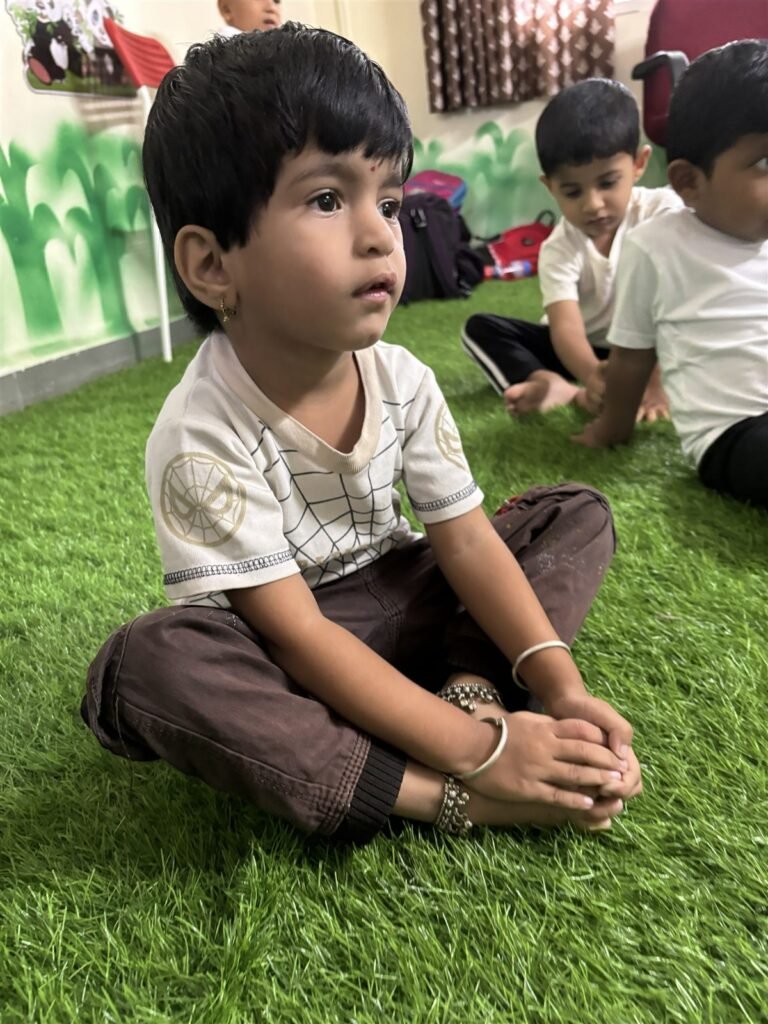
Ten minutes inside a classroom will tell you more than any brochure. Here is what to look at while you are standing there.
Choosing a first school is largely a decision about trust, made on very little evidence. Most
parents visit two or three places, all of which are on their best behaviour, and then choose on
a feeling. The feeling is not a bad guide — but it helps to know what produced it.
Here is what we would look at if we were the ones visiting.
Go when the children are there
An empty campus tells you about the furniture. Ask to visit mid-morning on an ordinary weekday,
when the rooms are full and nobody has had time to tidy. A school that will only show you an
empty building on a Saturday is showing you the building, not the school.
Watch a transition, not a lesson
Any school can run a good twenty minutes of circle time for a visitor. The revealing moment is
the messy one: coming in from outdoor play, clearing up before lunch, the walk to the washroom.
Watch how the adults handle thirty small people changing activity at once. Calm, unhurried
transitions are the single best sign of a well-run early-years room.
Ask about the ratio — and then count
Ratios are the most quoted and least verified number in the sector. Ask what it is, then count
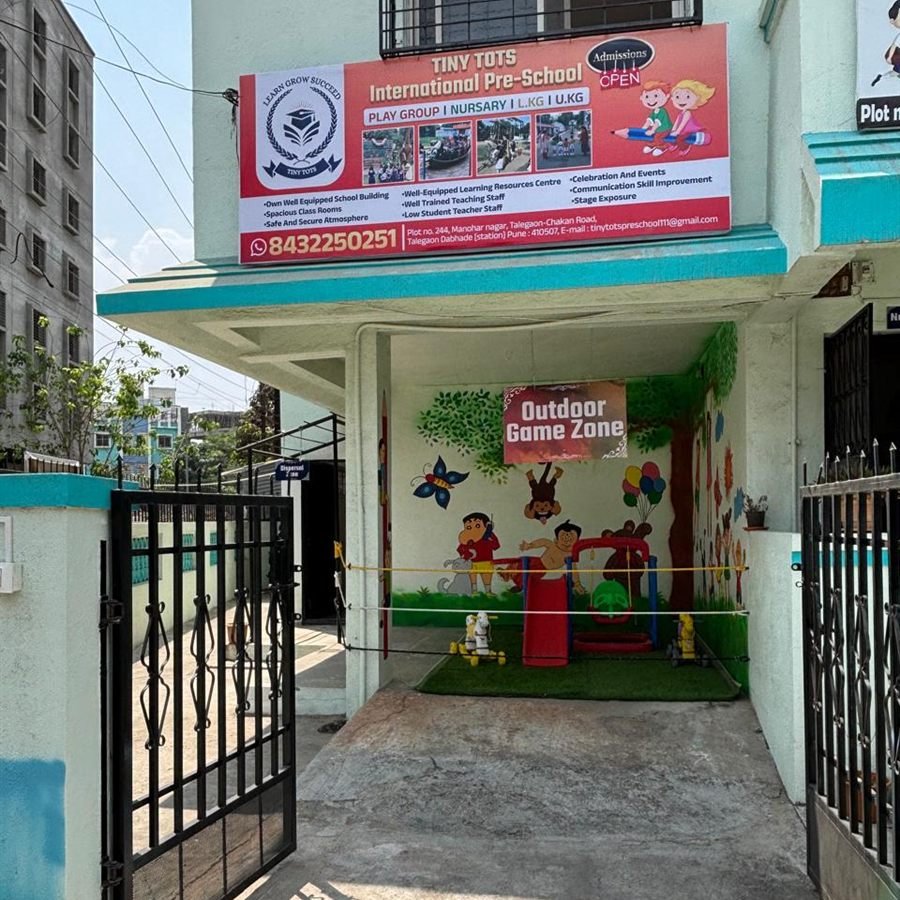
the adults and children in a room while you are standing in it. At Tiny Tots it is one teacher
to eight children, and six in Playgroup where they are smallest.
Ask what happens when a child cries
Every child cries at some point in the first fortnight. The answer you want is specific: a
named settling-in plan, a phased start, someone who will call you. The answer you do not want
is “they settle in a day or two” — some do, many do not, and a school that has
not thought about the ones who do not has not thought about it at all.
Look at what is on the walls
If every painting is identical and beautifully finished, an adult made them. Children’s
work at this age is lopsided, over-glued and gloriously wrong, and a school confident enough to
display it is a school that values the process over the display.
Things that matter less than you think
- Smartboards and tablets. A three-year-old learns more from a tray of water
than from a screen. Technology in a pre-school is a marketing feature. - Early formal writing. Children pushed to write at three often have weaker
handwriting at seven, because the hand was not ready. Grip and strength come first. - The size of the building. What matters is the size of the group your child
is actually in.
Questions worth asking out loud
- How long have the teachers been here? High turnover is hard on small children.
- What is the settling-in plan, in days?
- What happens if my child is unwell during the day, and who calls me?
- Can I see the pickup register and the visitor log?
- What will you tell me about my child at the end of term, and how do you know it?
If a school cannot show you something on the day you ask, assume it does not
exist.
That last line is the standard we hold ourselves to, and you are welcome to test it on us.
Weekday mornings, ten to twelve.
More for parents
While you are here.
Admissions open
Come and see a normal Tuesday.
Walk the campus while the children are in it, meet the teacher your child would actually have, and ask us anything.